“Laughter provides relief from tragedy” [Carpenter, 2010, pp. 2].
Outline
The quote above highlights concisely the value of comedy to Jewish communities in ghettos and camps during the terror which was National Socialism that plagued Germany, and later, other parts of Europe, from 1933-45. Whilst my dissertation will place equal emphasis on resistance to the Nazi regime at home and abroad, primarily through the use of jokes and film, the documentary pitched here will focus most importantly on how Jewish communities made use of humour and comedy during their anguished times as victims of the most unspeakable period in European history.
Employing the use of emotional history as the key form of methodology used in both my dissertation and this project, both assignments aim to emphasise the imperativeness of acknowledging this medium of history as it provides the closest form of a looking glass into the private and emotional lives of the victims of the Holocaust. This topic of research is distinctive to any other of the period, as there are no documentaries or projects which look soley into the significance of humour during this period and the ripples it made in creating a successful barrier of resistance against the Nazi regime.
The information below will outline the aims and practicalities of the project, in conjunction with some obstacles which may be encountered in the process of production, especially with a documentary of this nature. It is obvious to highlight that this project correlates to the popular strand as it is a documentary which will be broadcasted to the public.
Pitch
This project is marketed towards far-reaching broadcasting companies like the History Channel which this blog is pitching to. It’s objective is to give the public a different viewpoint into the emotional lives of Jews as they banded together and fought to remain strong during this difficult age. Despite the heavy nature of the content, it will be an easily digestible documentary as to not overly complicate concepts, in turn making it easy to understand for students as well as the mainstream public.

The final product is envisioned to be an engaging and informational documentary that launches an in-depth investigation into the extent of and successful use of comedy by those affected under National Socialism, most specifically within the confines of the camps and ghettos, amongst historians and viewers.
The material and subject matter presented here is best suited to a documentary to produce this information as it is a more wide-reaching form of history which can incapsulate the viewer’s attention with the use of visual and audio components. This in turn makes the content more easily consumable for audiences, especially in reference to this documentary which utilises delicate information and sources and in turn could make a difficult watch for many.
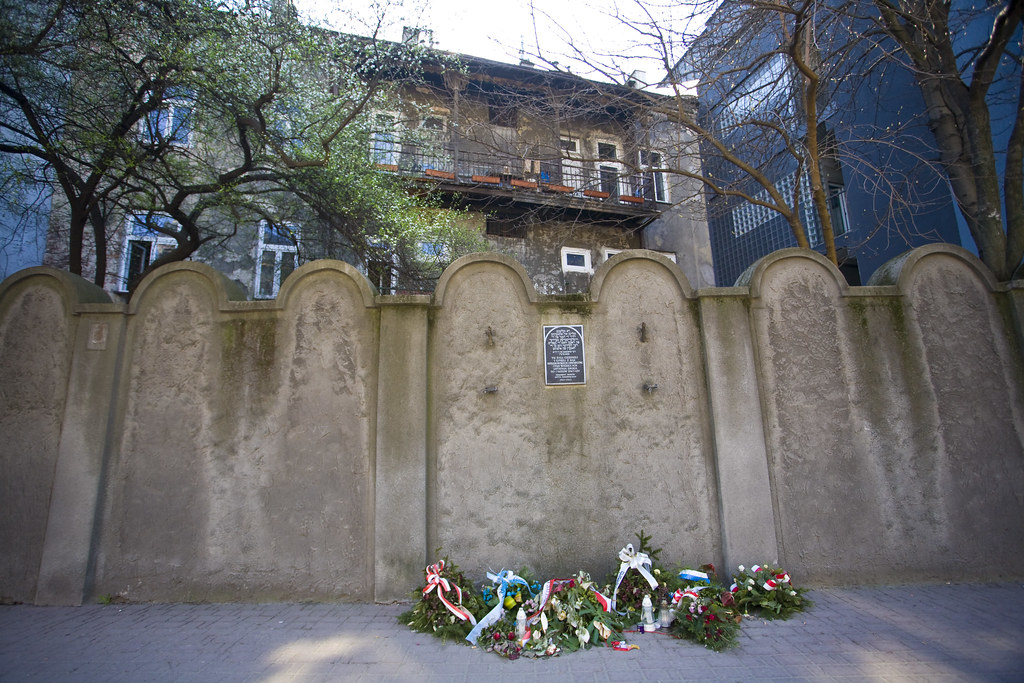
This documentary will focus on a plethora of primary source material found in archives that is indicative of how comedy was used as a source of strength amongst Jewish communities. Primary sources used may include; film reels or reenactments of productions and cabaret, comedy shows, well-known jokes and drawings. This primary evidence will be presented in sections as to not confuse the viewers as to what the presenter is referencing when relaying context and explanations to the audience. This will make a structured and easily watchable documentary. Primary evidence will provide the foundation of the show as it will carry the viewer through the different methods by which comedy was used as resistance and how far-reaching it was.
After much research, it has been concluded that the History Channel will be an appropriate broadcasting channel for this documentary as it has wide-reaching viewship in America as it is broadcasted in nearly every home. Despite being an American channel, it is still commercially successful in other parts of the world, especially in the UK, Europe and Australia, meaning this documentary will reach all corners of the world leading to a hopefully significant viewership. The History Channel is arguably the best platform to pitch a history documentary to as they will provide the greatest opportunity to make a successful production.
Furthermore, the aims and objectives of the History Channel in providing a medium to educate and provide historical resources for everyone are in line with the motivations of this documentary which is to provide and make readily accessible historical resources and information which the average viewer will not ordinarily encounter or easily be in touch with. This will hopefully make this documentary a more desirable project they will reach for.
Despite the exclusive nature of this topic setting it aside from any other televised documentary, this could lead to issues collecting sources, particularly exclusive ones outside the reach of the public, in turn, making the production process increasingly costly and possibly delayed. This challenge has the possibility of delaying the pre-production research project which could also lead to more money being spent.
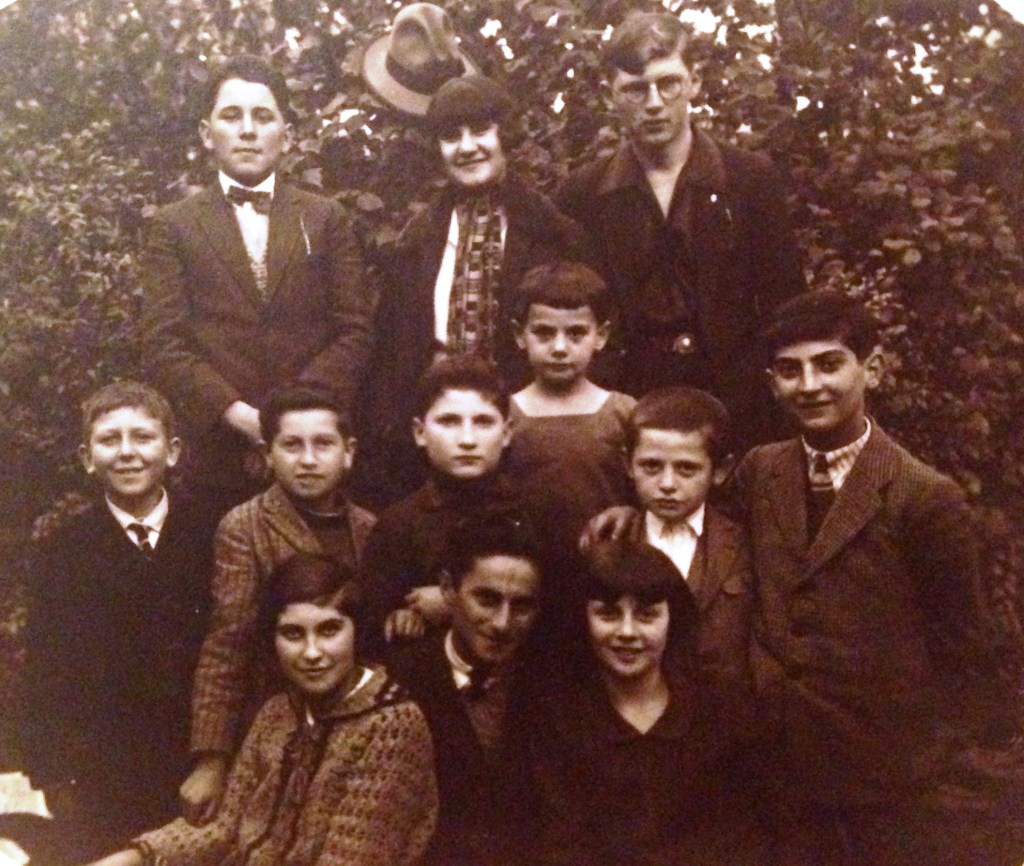
When creating the final product, it is obvious to note that the content the documentary covers is one of fragile nature for many considering the documentary focuses on one of the most prolific and violent times in history in addition to the emotional and personal history of the victims subjected to mass oppression and genocide during this age. It would be an appropriate measure to include a trigger warning before the programme begins outlining the use of difficult and upsetting material being shown. This would minimise possible upset from the audience if they were subjected to this material without a prior warning.
Whilst it is the full intention of the production to be broadcasted with the upmost respect being shown to the victims and their families, it is possible some viewers may find offence that this documentary is focusing on the ‘lighter’ sides of the victim’s difficult circumstances. However, this documentary wishes to maintain the importance of this side of history as comedy was crucial to their united power and sense of community within the camps and ghettos. By not educating the public on emotional history such as this, it is left to slip into the chasm which holds parts of history never to be learnt from. This is not what protecting history is about.
Budget
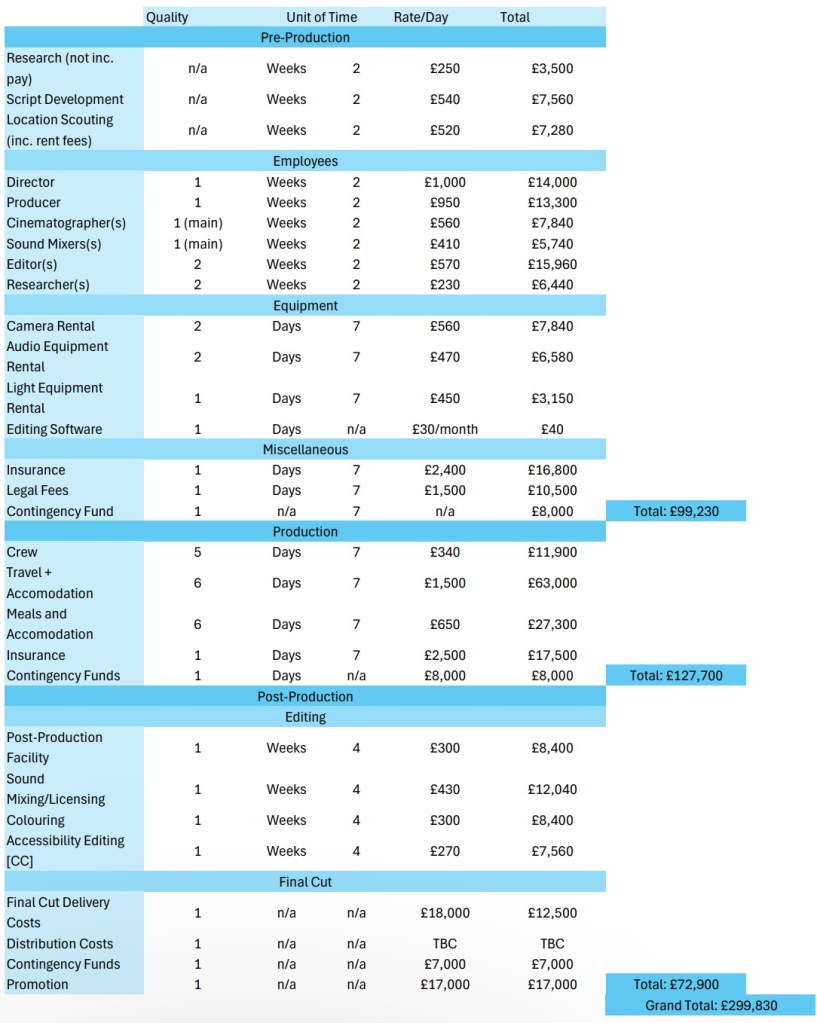
In respect to accessibility for all viewers, this documentary will provide the option of closed captions [CC] for viewer’s hard of hearing making viewership more accessible to wider audiences whom may have been put off watching if this was not an option readily available for them. In the modern age, it is the aim and requirement of all broadcasting platforms to make their content accessible by providing these services to their viewers. It is important for all viewers, with a disability or not, to be capable of accessing the content they need through popular mediums like documentary. A segment of the post-production budget has been set aside to integrate these service into to the broadcast, readily available for viewers to use.
Presented here is a budget outline which details the costs typically encountered in the production of a documentary. It has been divided into different stages of the production process to highlight what areas the budget will be concentrated on. For a medium-scale documentary production such as this one, the typical budget permitted by the History Channel allows one ranging from around $225K to $300K. This documentary aims to spend on the higher end of this spectrum at $299K, this is in line with what is typically granted.
As aforementioned, this project will be one episode lasting an hour, not a series.
This budget takes into consideration; salaries, the renting of equipment, insurance and contingency funds at each stage to protect against issues that may crop up in the production process.
In respect to marketing, this project will utilise advertising and social media promotion which has been included in the post-production section of this budget. This will include a trailer aimed at engaging the viewer’s attention and hopefully enticing them to watch the full documentary when it is released.
Long-term Vision
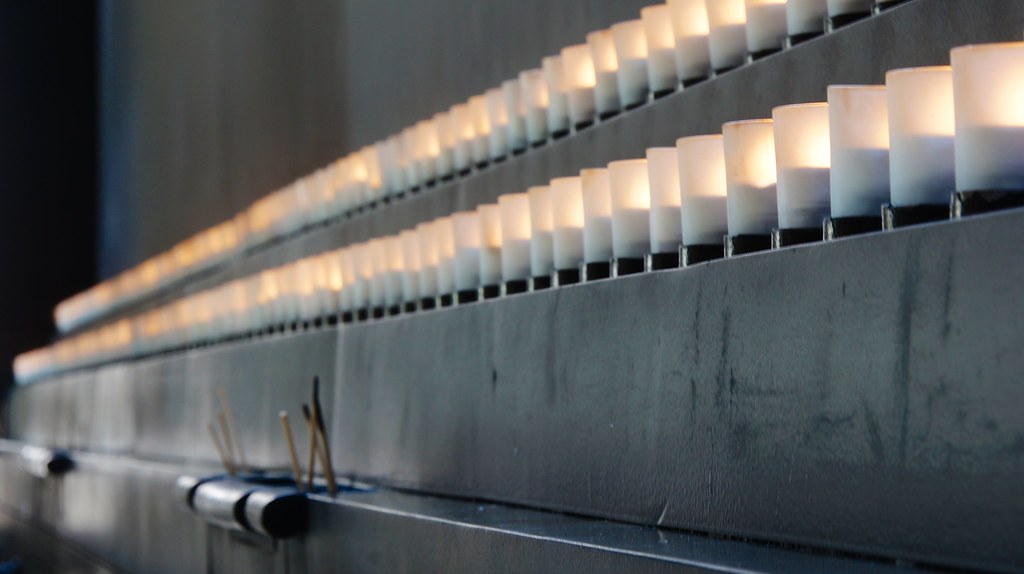
Whilst this documentary will only consist of one hour, not a series of episodes, this documentary still aims to create a long-lasting impression on viewers and spark conversations and further research into the emotional history of this tragic time in history. Whilst the use of humour as a form of resistance is not a far-reaching aspect of history with much research, this documentary has the capability of influencing public comprehention of this side of history as well as providing unseen information and documentation for those who wish to further research the topic.
Looking into Jewish communities is an appropriate place to start as the Holocaust is within the lifetime of a large section of the population and remains a significant presence in our lives today. It is unfortunate that many are unaware of the place comedy held in the lives of those affected, however, this documentary aims to change that narrative as it brings to light a certain emotion, humour, that many would not imagine to find amongst communities most affected by these distressing circumstances.
Word Count: 1,432
 Proposal